Experience the new technology.

Tuesday, November 10, 2009 /

Sunday, August 16, 2009 / Labels: ,

Home Min attends WBC to 'prove a point'

Union Home Minister P Chidambaram attends the World Badminton Championships in Hyderabad as ordinary spectator to prove point. Sources said that the minister took the step to send out a message to the participants. It is also said that the home minister paid money to buy a ticket from the window.


Sources also said that the Home Minister fefused government transport and security cover. It is also said that the minister sat in spectators gallery like ordinary citizen.

The Home Minister's symbolic initiative came after some players pulled out citing security threat. A prominent terrorist organisation has threatened to target the Championship.

Sphere: Related Content

comments (1) / Read More/

Bookmark and Share

/ Labels:

Twitter needs a back up

Twitter went down last week, and the world got very quiet. People didn't know what do with themselves; they wanted to tweet the news that Twitter was down, but that was out of the question. Entire overheard conversations went unremarked upon, and mini-reviews of recent episodes of True Blood withered on the vine. I saw a funny Onion video that I was sure my followers would have appreciated and an outrageous Rush Limbaugh quote that demanded my impassioned response, but what could I do? Twitter was down for just a few hours—the service's first major outage during its new era of ubiquity—and it felt strange. It's not normal for an entire medium of communication to go offline; sure, sometimes Gmail is balky and your office phones won't respond, but for everyone else, e-mail and the phones and the Web still work. When Twitter goes down, it's down for everyone, everywhere.

Twitter is run by a single company in a single office building in San Francisco. When you send out a message, it flies about Twitter's servers and then alights in all your Twitter pals' cell phones and Tweetdecks. The system is fast and technologically simple, which helps explain its exponential growth.


But for Twitter, centralization is also a curse. In its early days, the site was known for its regular brokenness—its error-page logo, the "fail whale," became a cultural shorthand for suckiness. Twitter went down so often because the idea behind Twitter—sending out short status updates to the world—became too popular for one company to handle.


This isn't unusual with new technology. In its early days, the Web itself doubled in size every few months. But the Web didn't buckle from overuse. That's because it was distributed—the Web is just a protocol, a set of common rules that connect lots of different servers managed by lots of different companies around the world. Twitter's frequent failures thus raise a question: Shouldn't microblogging be distributed, too? How can a single company manage everyone's updates—shouldn't it be more like e-mail: managed by scores of different providers?


Dave Winer, the pioneering programmer and blogger who runs Scripting.com, has been arguing for months that Twitter is untenable in its current form. Winer likes Twitter—or, at least, he likes the idea of Twitter. Short status updates could well succeed e-mail as the dominant mode of wired communication. But having one company manage the entire enterprise is technically fragile, he argues. Twitter went down last week due to a distributed denial-of-service attack aimed at a single Twitter user—millions of zombie computers had been directed to cripple the user's social-networking pages (apparently as part of ongoing cyberwarfare between Russian and Georgian hackers). The rest of us were collateral damage—Twitter went down for you because of a beef between people on the other side of the world. Does this make sense? Winer doesn't think so. If Twitter worked more like e-mail or the Web—a system managed by different entities that were connected by common Web protocols—a hit like last week's wouldn't be crippling. A denial-of-service attack would have brought down some people's status updates, but Twitter would still work for most of the world.


READ MORE

Sphere: Related Content

comments (0) / Read More/

Bookmark and Share

/ Labels:

Moon, Mars out of reach: US panel

Cape Canaveral (USA): The US plan to return astronauts to the moon by 2020 will not happen without a big boost in Nasa's budget, leaving only the International Space Station as a viable target for the country's human space program, according to a presidential review panel.


The Human Space Flight Plans committee, which presented its preliminary findings to the White House on Friday, concluded that a human mission to Mars currently would be too risky.

Developing new spaceships to replace the retiring space shuttle fleet and bigger rockets to reach the moon would require about $3 billion more per year, the panel headed by former Lockheed Martin chief Norm Augustine said.

The only human space program affordable under Nasa's existing budget is an enhanced space station, one that has a side benefit of seeding a commercial passenger-launch services market, said the panel, which completed a series of public meetings this week.

Nasa spends about half of its $18 billion annual budget on human space flight to fly the space shuttles, build and operate the space station and develop new vehicles in a follow-on program called Constellation.

The committee said the new U.S. exploration initiative - aimed at landing astronauts on the moon by 2020 - is doomed because its 10-year, $108 billion budget has been shaved by about $30 billion.

"We can't do this program in this budget," said panel member Sally Ride, a former astronaut. "This budget is simply not friendly to exploration."

Sphere: Related Content

comments (0) / Read More/

Bookmark and Share

Tuesday, July 28, 2009 / Labels:

Tense Waiting Game for Michael Jackson's Doctor

What drugs were in Michael Jackson's system at the time of his death?
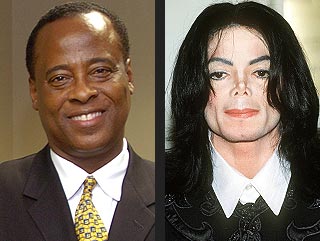

The L.A. coroner's pending toxicology report – expected to answer that key question any day now – may hold the fate of Dr. Conrad Murray, the singer's personal physician. Murray was with Jackson on the day he died and is the apparent focus of a manslaughter investigation.

According to Los Angeles County Department of Coroner Chief Investigator Craig Harvey, the long
awaited autopsy report will be released within days. "We anticipate releasing it this week," Harvey said July 27. "We still have details to work out."


'In the Dark'

Miranda Sevcik, spokesperson for Murray's attorney Ed Chernoff, says they're "in the dark" as to whether an arrest of Murray is imminent, even as news reports increasingly point to potentially serious trouble for the Houston-based physician.

On Monday, CNN and the Associated Press reported investigators believe Murray was the person who injected Jackson with the powerful anesthesia Propofol the night before the entertainer died. Jackson regularly used the drug to help him sleep, according to media reports.

Murray's rep has declined to comment on whether he had administered Propofol to Jackson. The only two drugs Murray has denied prescribing for Jackson are Demerol and OxyContin. In response to media reports about Murray, his lawyer posted the following statement on his Web site Monday night:

"It's a waste of time responding to all these timed 'leaks' from 'anonymous' sources," Ed Chernoff wrote. "I feel like a horse swatting flies. Everyone needs to take a breath and wait for these long delayed toxicology results. I have no doubt they want to make a case for goodness sakes, its Michael Jackson! But things tend to shake out when all the facts are made known, and I'm sure that will happen here as well."


Another Search?

Authorities have twice interviewed Murray and sought a third session with him, which has not yet been set. They also raided his Houston clinic on July 22, which Murray's camp said came as a surprise. His rep didn't know whether a similar search of the doctor's offices in Las Vegas would occur.

"Obviously investigators are not sharing details with us about their plans, as evidenced by what happened last week," Sevcik says. "Like everyone else, we're awaiting the results of the toxicology tests, and at that point, we'll assess what we need to do."

L.A.-based forensic toxicologist Nachman Brautbar, M.D., who's not involved with the case, says the the toxicology report – an analysis of drugs in a person's system – "plays a prime role in putting the pieces together of why someone died when the initial autopsy rules out any obvious known causes of death." But he said it would be "unsual" for a coroner to rule homicide – a death caused by another person which could include manslaughter – in a drug-related case outside of a hospital or nursing home scenario.

From  HUFF POST

Sphere: Related Content

comments (0) / Read More/

Bookmark and Share

/ Labels:

The Recession Is Over

In Westport, Mass., about 60 miles southwest of Boston, traffic crawls along Route 6 as drivers make their way to the nearby Atlantic beaches like Horseneck or Baker's. A 10-worker crew pouring and raking asphalt onto the road slows their progress. It's the kind of small annoyance drivers nationwide face each summer. It's also one small manifestation of President Barack Obama's ambitious strategy for jump-starting the economy.


In April, the P.J. Keating Co., a construction firm based in Lunenburg, Mass., bid on about a dozen stimulus projects funded through the U.S. Transportation Department. It won two contracts, including this $4.06 million job, rescuing what would have been a dismal year for P.J. Keating, says David Baker, 36, a manager of construction operations. As business dwindled over the past two years, the firm laid off about a dozen people. "We definitely would have been faced with another half-dozen layoffs had we not gotten these stimulus projects," Baker says. Instead, the company kept all its remaining 300 employees and hired five new ones. Ordinarily, a few government-funded jobs, like traffic on Route 6, wouldn't be noteworthy. But the tableau neatly encapsulates the promise—and pitfalls—of an economy at an inflection point.


The Great Recession, which rolled over our financial lives like one of P.J. Keating's giant pavers, is most likely over. Home sales, while still far below the levels of a year ago, have risen for three straight months—a first since 2004. The stock market has rallied 44 percent since March, thanks to renewed optimism and improving earnings from big companies like Goldman Sachs and Apple. In June, seven of the 10 indicators in the Conference Board Leading Economic Index pointed upward, including manufacturing hours worked and unemployment claims. Macroeconomic Advisers, the St. Louis-based consulting firm, says the economy is expanding at a 2.5 percent annual rate in the current quarter. Economic activity "will increase slightly over the remainder of 2009," Federal Reserve Chairman Ben Bernanke told Congress.

Irrational exuberance it's not. But even stagnation would be an improvement over recent history. The U.S. economy shrank at nearly a 6 percent annualized rate between September 2008 and March 2009, a shocking slowdown that pitched the global economy into recession for the first time since World War II. "This looks an awful lot like the beginning of a second Great Depression," Nobel laureate Paul Krugman said in January. Catastrophe may have been averted. But when economists proclaim a recession over, they're celebrating a technicality: They mean economic output has stopped contracting. And while that is good news, you might wait a while before adding Judy Garland's rendition of "Happy Days Are Here Again" to your iPod. GDP growth alone can't feed a family or pay a mortgage. Cursed with a high national debt load and blessed with a dynamic, growing work force, the U.S. economy needs annual growth of at least 1.5 percent just to feel like we're standing still.


Worse, the data point that means the most to our psychological well-being—unemployment—is likely to keep climbing. The loss of 6.5 million jobs since December 2007 has spurred the sharpest rise in the unemployment rate since the 1930s. As manufacturing jobs move overseas and companies struggle to further reduce costs, unemployment—which stands at 9.5 percent—is likely to rise above 10 percent. "There's a difference between having an expansion and an economy that has recovered," says Lawrence Summers, Obama's chief economic adviser.

Having survived a near-death economic experience, Americans now need to focus on surviving what's likely to be a pokey, painful recovery. "I see 1 percent growth in the economy in the next few years," says New York University economist Nouriel Roubini. "It's going to feel like a recession, even when it ends." Shifting our unwieldy $14 trillion economy from rapid reverse into neutral took heroic efforts from the Federal Reserve, the Treasury Department (in two administrations), two sessions of Congress, and, of course, the taxpayers. But the greater challenge may be getting the economy to start growing at a pace that creates jobs, boosts incomes, and raises corporate profits—all without triggering inflation.


A year ago, I dubbed this a new kind of recession—one caused by turmoil in housing and finance rather than manufacturing or weak consumer spending. Now that it's over, we'll need a new kind of recovery. For 60 years, policymakers have relied on a series of simple tools for combating slowdowns and promoting growth: The Fed cuts interest rates, government slashes taxes, and a deregulated Wall Street provides easy money. All of which spurs debt-fueled consumption and the movement of goods and services around the globe.

No more. The Fed literally can't cut interest rates further—the overnight interest rate it controls is at zero. Given the deficits and Democratic control of Washington, the prospect of broad-based tax cuts are slim. Americans are still stuffing cash under the mattress. "The last several recoveries were not sustained because they were based on bubbles, they were led by consumption, and they enhanced inequality," says Summers. "The president's emphasis is on having a different kind of expansion."


There is more..

READ MORE+

Sphere: Related Content

comments (0) / Read More/

Bookmark and Share

Blog Widget by LinkWithin

Subscribe

Enter your email address:

wibiya widget