Friday, December 4, 2009

Over 90 killed in Russia club explosion

Moscow, Dec 5 (RIA Novosti) An explosion in a club in the city of Perm in Russia killed at least 90 people and injured 114, an emergencies ministry source said Saturday.
The explosion and the subsequent fire is believed to have been caused by breaches of fire safety rules while using pyrotechnics, a local emergencies ministry source said.
'Almost all dead and injured have already been taken away. The site of the tragedy is now cordoned off,' the source said.
A local police source said most casualties were due to smoke and stampede that followed.
'According to preliminary data, a stampede occurred at the exit, and those who stayed at the cafe died of carbon dioxide poisoning,' the source said.
Firefighters brought the blaze under control. The majority of victims were cafe employees and their relatives, as the cafe marked its anniversary.
Investigators have ruled out a terrorist attack.

Tuesday, November 10, 2009

Sesame Street Anniversary: Where Are the Realistic Animals? : Discovery News

Sesame Street Anniversary: Where Are the Realistic Animals? : Discovery News

Posted using ShareThis

Sunday, August 16, 2009

Home Min attends WBC to 'prove a point'

Union Home Minister P Chidambaram attends the World Badminton Championships in Hyderabad as ordinary spectator to prove point. Sources said that the minister took the step to send out a message to the participants. It is also said that the home minister paid money to buy a ticket from the window.


Sources also said that the Home Minister fefused government transport and security cover. It is also said that the minister sat in spectators gallery like ordinary citizen.

The Home Minister's symbolic initiative came after some players pulled out citing security threat. A prominent terrorist organisation has threatened to target the Championship.

Twitter needs a back up

Twitter went down last week, and the world got very quiet. People didn't know what do with themselves; they wanted to tweet the news that Twitter was down, but that was out of the question. Entire overheard conversations went unremarked upon, and mini-reviews of recent episodes of True Blood withered on the vine. I saw a funny Onion video that I was sure my followers would have appreciated and an outrageous Rush Limbaugh quote that demanded my impassioned response, but what could I do? Twitter was down for just a few hours—the service's first major outage during its new era of ubiquity—and it felt strange. It's not normal for an entire medium of communication to go offline; sure, sometimes Gmail is balky and your office phones won't respond, but for everyone else, e-mail and the phones and the Web still work. When Twitter goes down, it's down for everyone, everywhere.

Twitter is run by a single company in a single office building in San Francisco. When you send out a message, it flies about Twitter's servers and then alights in all your Twitter pals' cell phones and Tweetdecks. The system is fast and technologically simple, which helps explain its exponential growth.


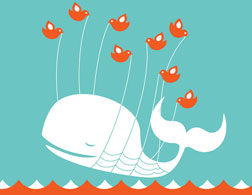
But for Twitter, centralization is also a curse. In its early days, the site was known for its regular brokenness—its error-page logo, the "fail whale," became a cultural shorthand for suckiness. Twitter went down so often because the idea behind Twitter—sending out short status updates to the world—became too popular for one company to handle.


This isn't unusual with new technology. In its early days, the Web itself doubled in size every few months. But the Web didn't buckle from overuse. That's because it was distributed—the Web is just a protocol, a set of common rules that connect lots of different servers managed by lots of different companies around the world. Twitter's frequent failures thus raise a question: Shouldn't microblogging be distributed, too? How can a single company manage everyone's updates—shouldn't it be more like e-mail: managed by scores of different providers?


Dave Winer, the pioneering programmer and blogger who runs Scripting.com, has been arguing for months that Twitter is untenable in its current form. Winer likes Twitter—or, at least, he likes the idea of Twitter. Short status updates could well succeed e-mail as the dominant mode of wired communication. But having one company manage the entire enterprise is technically fragile, he argues. Twitter went down last week due to a distributed denial-of-service attack aimed at a single Twitter user—millions of zombie computers had been directed to cripple the user's social-networking pages (apparently as part of ongoing cyberwarfare between Russian and Georgian hackers). The rest of us were collateral damage—Twitter went down for you because of a beef between people on the other side of the world. Does this make sense? Winer doesn't think so. If Twitter worked more like e-mail or the Web—a system managed by different entities that were connected by common Web protocols—a hit like last week's wouldn't be crippling. A denial-of-service attack would have brought down some people's status updates, but Twitter would still work for most of the world.


READ MORE

Moon, Mars out of reach: US panel

Cape Canaveral (USA): The US plan to return astronauts to the moon by 2020 will not happen without a big boost in Nasa's budget, leaving only the International Space Station as a viable target for the country's human space program, according to a presidential review panel.


The Human Space Flight Plans committee, which presented its preliminary findings to the White House on Friday, concluded that a human mission to Mars currently would be too risky.

Developing new spaceships to replace the retiring space shuttle fleet and bigger rockets to reach the moon would require about $3 billion more per year, the panel headed by former Lockheed Martin chief Norm Augustine said.

The only human space program affordable under Nasa's existing budget is an enhanced space station, one that has a side benefit of seeding a commercial passenger-launch services market, said the panel, which completed a series of public meetings this week.

Nasa spends about half of its $18 billion annual budget on human space flight to fly the space shuttles, build and operate the space station and develop new vehicles in a follow-on program called Constellation.

The committee said the new U.S. exploration initiative - aimed at landing astronauts on the moon by 2020 - is doomed because its 10-year, $108 billion budget has been shaved by about $30 billion.

"We can't do this program in this budget," said panel member Sally Ride, a former astronaut. "This budget is simply not friendly to exploration."

Tuesday, July 28, 2009

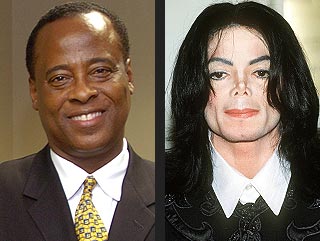
Tense Waiting Game for Michael Jackson's Doctor

What drugs were in Michael Jackson's system at the time of his death?


The L.A. coroner's pending toxicology report – expected to answer that key question any day now – may hold the fate of Dr. Conrad Murray, the singer's personal physician. Murray was with Jackson on the day he died and is the apparent focus of a manslaughter investigation.

According to Los Angeles County Department of Coroner Chief Investigator Craig Harvey, the long
awaited autopsy report will be released within days. "We anticipate releasing it this week," Harvey said July 27. "We still have details to work out."


'In the Dark'

Miranda Sevcik, spokesperson for Murray's attorney Ed Chernoff, says they're "in the dark" as to whether an arrest of Murray is imminent, even as news reports increasingly point to potentially serious trouble for the Houston-based physician.

On Monday, CNN and the Associated Press reported investigators believe Murray was the person who injected Jackson with the powerful anesthesia Propofol the night before the entertainer died. Jackson regularly used the drug to help him sleep, according to media reports.

Murray's rep has declined to comment on whether he had administered Propofol to Jackson. The only two drugs Murray has denied prescribing for Jackson are Demerol and OxyContin. In response to media reports about Murray, his lawyer posted the following statement on his Web site Monday night:

"It's a waste of time responding to all these timed 'leaks' from 'anonymous' sources," Ed Chernoff wrote. "I feel like a horse swatting flies. Everyone needs to take a breath and wait for these long delayed toxicology results. I have no doubt they want to make a case for goodness sakes, its Michael Jackson! But things tend to shake out when all the facts are made known, and I'm sure that will happen here as well."


Another Search?

Authorities have twice interviewed Murray and sought a third session with him, which has not yet been set. They also raided his Houston clinic on July 22, which Murray's camp said came as a surprise. His rep didn't know whether a similar search of the doctor's offices in Las Vegas would occur.

"Obviously investigators are not sharing details with us about their plans, as evidenced by what happened last week," Sevcik says. "Like everyone else, we're awaiting the results of the toxicology tests, and at that point, we'll assess what we need to do."

L.A.-based forensic toxicologist Nachman Brautbar, M.D., who's not involved with the case, says the the toxicology report – an analysis of drugs in a person's system – "plays a prime role in putting the pieces together of why someone died when the initial autopsy rules out any obvious known causes of death." But he said it would be "unsual" for a coroner to rule homicide – a death caused by another person which could include manslaughter – in a drug-related case outside of a hospital or nursing home scenario.

From  HUFF POST

The Recession Is Over

In Westport, Mass., about 60 miles southwest of Boston, traffic crawls along Route 6 as drivers make their way to the nearby Atlantic beaches like Horseneck or Baker's. A 10-worker crew pouring and raking asphalt onto the road slows their progress. It's the kind of small annoyance drivers nationwide face each summer. It's also one small manifestation of President Barack Obama's ambitious strategy for jump-starting the economy.


In April, the P.J. Keating Co., a construction firm based in Lunenburg, Mass., bid on about a dozen stimulus projects funded through the U.S. Transportation Department. It won two contracts, including this $4.06 million job, rescuing what would have been a dismal year for P.J. Keating, says David Baker, 36, a manager of construction operations. As business dwindled over the past two years, the firm laid off about a dozen people. "We definitely would have been faced with another half-dozen layoffs had we not gotten these stimulus projects," Baker says. Instead, the company kept all its remaining 300 employees and hired five new ones. Ordinarily, a few government-funded jobs, like traffic on Route 6, wouldn't be noteworthy. But the tableau neatly encapsulates the promise—and pitfalls—of an economy at an inflection point.


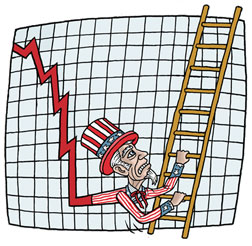
The Great Recession, which rolled over our financial lives like one of P.J. Keating's giant pavers, is most likely over. Home sales, while still far below the levels of a year ago, have risen for three straight months—a first since 2004. The stock market has rallied 44 percent since March, thanks to renewed optimism and improving earnings from big companies like Goldman Sachs and Apple. In June, seven of the 10 indicators in the Conference Board Leading Economic Index pointed upward, including manufacturing hours worked and unemployment claims. Macroeconomic Advisers, the St. Louis-based consulting firm, says the economy is expanding at a 2.5 percent annual rate in the current quarter. Economic activity "will increase slightly over the remainder of 2009," Federal Reserve Chairman Ben Bernanke told Congress.

Irrational exuberance it's not. But even stagnation would be an improvement over recent history. The U.S. economy shrank at nearly a 6 percent annualized rate between September 2008 and March 2009, a shocking slowdown that pitched the global economy into recession for the first time since World War II. "This looks an awful lot like the beginning of a second Great Depression," Nobel laureate Paul Krugman said in January. Catastrophe may have been averted. But when economists proclaim a recession over, they're celebrating a technicality: They mean economic output has stopped contracting. And while that is good news, you might wait a while before adding Judy Garland's rendition of "Happy Days Are Here Again" to your iPod. GDP growth alone can't feed a family or pay a mortgage. Cursed with a high national debt load and blessed with a dynamic, growing work force, the U.S. economy needs annual growth of at least 1.5 percent just to feel like we're standing still.


Worse, the data point that means the most to our psychological well-being—unemployment—is likely to keep climbing. The loss of 6.5 million jobs since December 2007 has spurred the sharpest rise in the unemployment rate since the 1930s. As manufacturing jobs move overseas and companies struggle to further reduce costs, unemployment—which stands at 9.5 percent—is likely to rise above 10 percent. "There's a difference between having an expansion and an economy that has recovered," says Lawrence Summers, Obama's chief economic adviser.

Having survived a near-death economic experience, Americans now need to focus on surviving what's likely to be a pokey, painful recovery. "I see 1 percent growth in the economy in the next few years," says New York University economist Nouriel Roubini. "It's going to feel like a recession, even when it ends." Shifting our unwieldy $14 trillion economy from rapid reverse into neutral took heroic efforts from the Federal Reserve, the Treasury Department (in two administrations), two sessions of Congress, and, of course, the taxpayers. But the greater challenge may be getting the economy to start growing at a pace that creates jobs, boosts incomes, and raises corporate profits—all without triggering inflation.


A year ago, I dubbed this a new kind of recession—one caused by turmoil in housing and finance rather than manufacturing or weak consumer spending. Now that it's over, we'll need a new kind of recovery. For 60 years, policymakers have relied on a series of simple tools for combating slowdowns and promoting growth: The Fed cuts interest rates, government slashes taxes, and a deregulated Wall Street provides easy money. All of which spurs debt-fueled consumption and the movement of goods and services around the globe.

No more. The Fed literally can't cut interest rates further—the overnight interest rate it controls is at zero. Given the deficits and Democratic control of Washington, the prospect of broad-based tax cuts are slim. Americans are still stuffing cash under the mattress. "The last several recoveries were not sustained because they were based on bubbles, they were led by consumption, and they enhanced inequality," says Summers. "The president's emphasis is on having a different kind of expansion."


There is more..

READ MORE+

Monday, July 27, 2009

Endeavour crew begin final spacewalk

Washington: Two astronauts ventured into open space on Monday to install cameras on the International Space Station's new Japanese laboratory during the final spacewalk of the US shuttle Endeavour mission.


Chris Cassidy and Tom Marshburn floated out of the ISS about one hour earlier than planned as they began the mission's fifth spacewalk, which was expected to last six and a half hours.

While Mashburn secures multi-layer insulation around the station's two-armed robot, the Special Purpose Dexterous Manipulator known as DEXTRE, Cassidy will separate the power channels shared by two of the station's four gyroscopes.

Splitting the channels of the two gyroscopes, which provide non-propulsive altitude control for the station, will prevent a failure on one channel from disabling both of the fixtures, the Nasa said.

The spacewalking duo will then install video cameras on the front and back of Japan's Kibo laboratory, which became the station's biggest room when it was installed last year.

For their final task, the astronauts will deploy a payload on another part of the ISS that will provide storage capability for spare space station hardware.

Who Is Killing America's Millionaires?

It isn't the tax man.


It hasn't been a good recession for the rich. The late boom was extraordinarily top-heavy, with the overwhelming majority of economic gains seemingly defying gravity and flowing to the top rung of the economic ladder. Now those with the most assets and income have the most to lose. Add together the declining markets, an imploding finance sector, a real estate rot that has eaten its way up from the ground floor to the penthouse, and the predations of Bernie Madoff and Sir Allen Stanford, millionaires who ripped off other millionaires, and, as my Newsweek colleague Robert Samuelson notes, these are tough times for the wealthy
As if market forces and malevolent actors weren't enough, the rich are now finding themselves targeted by politicians. Strapped for cash, states, cities, and the federal government are seeking to soak the rich—or at least to make them pay taxes at the same marginal rates as they did in the Reagan years, which many on the right regard as an act equivalent to executing landed gentry. Some politicians have even suggested that we fund health care by slapping a surtax on people with annual incomes of more than $1 million.


This tactic isn't likely to work, in large part because people who make a lot of money are quite effective at swaying public policy. What's more, the wealthy have many defenders who argue that taxing the golden geese will cause them to fly away. In May, the Wall Street Journal op-ed page argued that millionaires fled Maryland after the state legislature boosted the top marginal state income tax rate to 6.25 percent on the top 0.3 percent of filers. "In 2008 roughly 3,000 million-dollar income tax returns were filed by the end of April," the Journal notes. "This year there were 2,000, which the state comptroller's office concedes is a 'substantial decline.' " The Journal uses this small sample to warn the federal government and states with progressive tax structures and lots of rich people—New York, New Jersey, California—to heed the lesson. Tax the wealthy too much, and they'll leave.


Read MORE

Saturday, July 25, 2009

North Korea Executes Christian For Distributing Bible: Rights Group

SEOUL, South Korea — A Christian woman accused of distributing the Bible, a book banned in communist North Korea, was publicly executed last month for the crime, South Korean activists said Friday.


The 33-year-old mother of three, Ri Hyon Ok, also was accused of spying for South Korea and the United States, and of organizing dissidents, a rights group said in Seoul, citing documents obtained from the North.

The Investigative Commission on Crime Against Humanity report included a copy of Ri's government-issued photo ID and said her husband, children and parents were sent to a political prison the day after her June 16 execution.

The claim could not be independently verified Friday, and there has been no mention by the North's official Korean Central News Agency of her case.

But it would mark a harsh turn in the crackdown on religion in North Korea, a country where Christianity once flourished and where the capital, Pyongyang, was known as the "Jerusalem of the East" for the predominance of the Christian faith.

According to its constitution, North Korea guarantees freedom of religion. But in reality, the regime severely restricts religious observance, with the cult of personality created by national founder Kim Il Sung and enjoyed by his son, current leader Kim Jong Il, serving as a virtual state religion. Those who violate religious restrictions are often accused of crimes such as spying or anti-government activities.

The government has authorized four state churches: one Catholic, two Protestant and one Russian Orthodox. However, they cater to foreigners only, and ordinary North Koreans cannot attend the services.

Still, more than 30,000 North Koreans are believed to practice Christianity in hiding – at great personal risk, defectors and activists say.

READ MORE

The China Bubble's Coming

Forget about a Shanghai stock bubble. The whole Chinese economy's getting ready to burst.


Financial commentators are obsessively debating whether the recent rise in the Chinese stock market means there's a bubble -- and if so, when it's going to burst.


My take? Who cares! What happens to the broader Chinese economy is what we should really be watching. It will have a far-reaching impact on the rest of the world -- much more far-reaching than a decline in stocks.

Despite everything, the Chinese economy has shown incredible resilience recently. Although its biggest customers -- the United States and Europe -- are struggling (to say the least) and its exports are down more than 20 percent, China is still spitting out economic growth numbers as if there weren't a worry in the world. The most recent estimate put annual growth at nearly 8 percent.


Is the Chinese economy operating in a different economic reality? Will it continue to grow, no matter what the global economy is doing?

The answer to both questions is no. China's fortunes over the past decade are reminiscent of Lucent Technologies in the 1990s. Lucent sold computer equipment to dot-coms. At first, its growth was natural, the result of selling goods to traditional, cash-generating companies. After opportunities with cash-generating customers dried out, it moved to start-ups -- and its growth became slightly artificial. These dot-coms were able to buy Lucent's equipment only by raising money through private equity and equity markets, since their business models didn't factor in the necessity of cash-flow generation.

Funds to buy Lucent's equipment quickly dried up, and its growth should have decelerated or declined. Instead, Lucent offered its own financing to dot-coms by borrowing and lending money on the cheap to finance the purchase of its own equipment. This worked well enough, until it came time to pay back the loans.
The United States, of course, isn't a dot-com. But a great portion of its growth came from borrowing Chinese money to buy Chinese goods, which means that Chinese growth was dependent on that very same borrowing.

Now the United States and the rest of the world is retrenching, corporations are slashing their spending, and consumers are closing their pocket books. This means that the consumption of Chinese goods is on the decline. And this is where the dot-com analogy breaks down. Unlike Lucent, China has nuclear weapons. It can print money at will and can simply order its banks to lend. It is a communist command economy, after all. Lucent is now a $2 stock. China won't go down that easily.

The Chinese central bank has a significant advantage over the U.S. Federal Reserve. Chairman Ben Bernanke and his cohort may print a lot of money (and they did), but there's almost nothing they can do to speed the velocity of money. They simply cannot force banks to lend without nationalizing them (and only the government-sponsored enterprises have been nationalized). They also cannot force corporations and consumers to spend. Since China isn't a democracy, it doesn't suffer these problems.

China's communist government owns a large part of the money-creation and money-spending apparatus. Money supply therefore shot up 28.5 percent in June. Since it controls the banks, it can force them to lend, which it has also done.

Finally, China can force government-owned corporate entities to borrow and spend, and spend quickly itself. This isn't some slow-moving, touchy-feely democracy. If the Chinese government decides to build a highway, it simply draws a straight line on the map. Any obstacle -- like a hospital, a school, or a Politburo member's house -- can become a casualty of the greater good. (Okay -- maybe not the Politburo member's house).

Although China can't control consumer spending, the consumer is a comparatively small part of its economy. Plus, currency control diminishes the consumer's buying power. All of this makes the United States' TARP plans look like child's play. If China wants to stimulate the economy, it does so -- and fast. That's why the country is producing such robust economic numbers.

Why is China doing this? It doesn't have the kind of social safety net one sees in the developed world, so it needs to keep its economy going at any cost. Millions of people have migrated to its cities, and now they're hungry and unemployed. People without food or work tend to riot. To keep that from happening, the government is more than willing to artificially stimulate the economy, in the hopes of buying time until the global system stabilizes. It's literally forcing banks to lend -- which will create a huge pile of horrible loans on top of the ones they've originated over the last decade.

But don't confuse fast growth with sustainable growth. Much of China's growth over the past decade has come from lending to the United States. The country suffers from real overcapacity. And now growth comes from borrowing -- and hundreds of billion-dollar decisions made on the fly don't inspire a lot of confidence. For example, a nearly completed, 13-story building in Shanghai collapsed in June due to the poor quality of its construction.

This growth will result in a huge pile of bad debt -- as forced lending is bad lending. The list of negative consequences is very long, but the bottom line is simple: There is no miracle in the Chinese miracle growth, and China will pay a price. The only question is when and how much.

Another casualty of what's taking place in China is the U.S. interest rate. China sold goods to the United States and received dollars in exchange. If China were to follow the natural order of things, it would have converted those dollars to renminbi (that is, sell dollars and buy renminbi). The dollar would have declined and renminbi would have risen. But this would have made Chinese goods more expensive in dollars -- making Chinese products less price-competitive. China would have exported less, and its economy would have grown at a much slower rate.

But China chose a different route. Instead of exchanging dollars back into renminbi and thus driving the dollar down and the renminbi up -- the natural order of things -- China parked its money in the dollar by buying Treasurys. It artificially propped up the dollar. And now, China is sitting on 2.2 trillion of them.

Now, China needs to stimulate its economy. It's facing a very delicate situation indeed: It needs the money internally to finance its continued growth. However, if it were to sell dollar-denominated treasuries, several bad things would happen. Its currency would skyrocket -- meaning the loss of its competitive low-cost-producer edge. Or, U.S. interest rates would go up dramatically -- not good for its biggest customer, and therefore not good for China.

This is why China is desperately trying to figure out how to withdraw its funds from the dollar without driving it down -- not an easy feat.

And the U.S. government isn't helping: It's printing money and issuing Treasurys at a fast clip, and needs somebody to keep buying them. If China reduces or halts its buying, the United States may be looking at high interest rates, with or without inflation. (The latter scenario is most worrying.)

All in all, this spells trouble -- a big, big Chinese bubble. Identifying such bubbles is a lot easier than timing their collapse. But as we've recently learned, you can defy the laws of financial gravity for only so long. Put simply, mean reversion is a bitch. And the longer excesses persist, the harder the financial gravity will bring China's economy back to Earth.


Source : HUFF POST

Friday, July 24, 2009

Donkey Business

The only zebra in Gaza.


GAZA—Something didn't quite look right about the zebra, but it was hard to say exactly what. Of the several ramshackle zoos in Gaza, Marah, located not far from the Bureij refugee camp, is by far the cheeriest: The animals are lively, the enclosures clean, and children gather around the cage of a resting lion.


Then again, the competition is hardly stiff: The zoo in Rafah features dead animals left to rot in their cages; another animal park, situated in a densely populated neighborhood in Bureij, recently shut down amid financial difficulties (and after neighbors complained of the smell). A third, also in Bureij, is so short of funds that a fox is kept in a grocery cart with a board over the top.

Yet Marah, with its broken-down bumper cars and a pit filled with sadly deflated balls, had its own not-quite-right feel—particularly the zebra. Standing near the back of its cage, facing away from the spectators, the animal kept its head tucked down.


"It's really a painted donkey," admitted Mahmud Berghat, the director of Marah, when asked about the creature. Making a fake zebra isn't easy—henna didn't work and wood paint was deemed inhumane, so they finally settled on human hair dye. "We cut its hair short and then painted the stripes," Berghat explained behind the closed door of his office.

It did the trick—if not for zoologists, then at least for legions of Gaza schoolchildren who have never seen a real zebra. When I asked him whether anyone had ever caught the ruse, the director admitted that two sharp university students had IDed the counterfeit creature. "But don't tell anyone," he said. "The children love him."

The idea of a zoo creating a fake zebra sounds preposterous, but this is Gaza, which, after two years of an economic blockade, is renowned for recycling, repurposing, and smuggling just about anything that can't be imported legally. The zoo, in a way, represents all three of these coping mechanisms: a couple of house cats stand in for wild cats; the lion was drugged and smuggled through a tunnel from Egypt; and the zebra, as Berghat joked, was "locally made."

Zoos in war zones produce an unending cascade of heart-string-tugging stories. Kabul, Afghanistan, had Marjan, the one-eyed lion, who famously survived the Soviet invasion and Taliban rule only to die in his sleep in 2002. The Baghdad zoo, once the largest in the region, was looted during the 2003 invasion.


Likewise, in Gaza, stories of hardship abound. During Israel's Operation Cast Lead, which started in December 2008 and continued through January 2009, Marah's zookeepers couldn't reach the animals. Some were hit by shrapnel; several, including a prized peacock, escaped; and many more died of starvation. The zoo stories are at times apocryphal. The Marah zoo says its lioness was killed by shrapnel; the same story was told about a lioness at the nearby Middle Zoo. (An odd coincidence, or perhaps life is hard for female lions?) But what differentiates Gaza's zoo is how the animals got there. Prior to the Hamas takeover, many of the animals were brought in legally from Egypt and Israel. But since 2007, the most common route animals take to their cages in Gaza is through the underground labyrinth of tunnels that snake from the southern tip of Gaza into Egypt's Sinai.


Though strictly regulated shipments are allowed in through the Israeli border, the majority of what's sold in Gaza's markets—from cement to Converse sneakers—is smuggled through the tunnels. The zoos, like everything else in Gaza, have become caught up in the bizarre economic situation of living in an international no man's land. When the Marah zoo, or just about any zoo in Gaza, needs a new animal, it places an order with a smuggler. Other than price, size is the only limitation—one tunnel owner in Rafah told me the biggest animal that can fit in the tunnels is a cow.

Read MORE

China dilutes one-child policy in Shanghai?

Beijing: Couples in China's glittering metropolis of Shanghai are being encouraged to have another child to overcome an ageing population due to the decades old strictly enforced one-child policy norm, an official said.


"We advocate eligible couples to have two kids because it can help reduce the proportion of the ageing people and alleviate a workforce shortage in the future," Xie Lingli, director of the Shanghai Population and Family Planning Commission, was quoted as saying by China Daily on Friday.

Shanghai has more than three million registered residents aged 60 and above, nearly 22 per cent of the population. By 2020, the proportion is expected to rise to about 34 per cent.

Family planning officials and volunteers will now make home visits and slip leaflets under doorways to encourage couples to have a second child if both have grown up as only children. Emotional and financial counselling will also be provided, officials said.

"The rising number of ageing people will put pressure on the younger generation and the society. We need to find ways to solve the problem, but it doesn't mean the country's family planning policy will be reversed," Xie said.

While some people are open to it, others are not.

Xiao Wang, 25, who works at a local company, said: "I'm not sure, but such policy really gives us one more option. If family finances permit, I want to have two kids with my wife in the future."

Another office worker, 26-year-old Xiao Chen, however, said: "I don't think we will have a second kid. After all, it is stressful work raising a child."

Thursday, July 23, 2009

$190,000 withdrawn in $20 bills

Defiant Mapua artist Roger Griffiths today made a stand against Westpac by withdrawing his $190,000 savings in $20 notes.


The bank provided a red-and-black carry bag to take away the cash after meticulously counting it in front of Mr Griffiths at its Nelson branch.

 
Mr Griffiths, a loyal Westpac customer for 25 years, decided to withdraw his money after the bank rejected his application for an $80,000 mortgage. "It's about time normal people took a stand."

He said the bank turned down his application because he did not have a regular income as an artist. However, he was a successful artist, exhibiting his paintings at the World of Wearable Art complex, in Christchurch and New York, he said.

He wanted to buy a $385,000 property in Mapua, had $200,000 in cash and was going to sell his $110,000 campervan.

That more than met the bank's criteria for a 20 per cent deposit, and the property which included a home and commercial premises would have returned $500 a week, he said.

He was disappointed when his loan application was rejected, but it was Westpac losing $111 million to Lane Walker Rudkin Industries that tipped his decision to withdraw his money.

"They can lose $110 million with LWR but turn down a normal customer who has never missed a loan payment," he said. "If they don't have the trust in me after 25 years, there's a problem for Westpac."

Having decided to withdraw his money, he then decided to make it hard for the bank by requesting payment in $20 bills.

He said the Nelson branch told him it did not have that amount and he would have to also go to other branches at Stoke, Richmond and Motueka. However, he insisted the bank have the money ready to collect at 9am today. He then took it to the Nelson Building Society, saying he would rather deal with NBS because it was part of the community.

His message to Westpac: "If you don't support the community, the community won't support you."

Mr Griffiths' protest comes after a series of embarrassments for Westpac. On Tuesday its former Alexandra bank manager admitted defrauding the bank of more than $400,000, and it has been left red-faced over the slip-up that allowed $10 million to be wrongly credited to a Rotorua service station co-owner who had since fled to China.

Westpac media relations manager Craig Dowling said today that when the bank lent money it required certain information to be provided to enable that lending to be done prudently.

"It's about providing evidence of an ability to meet regular repayments."

 In Mr Griffiths' case that information was not provided for it to be assessed, he said. Mr Griffiths' withdrawal was disappointing.

Naked girls plough fields in India for rain

PATNA, India:Farmers in an eastern Indian state have asked their unmarried daughters to plough parched fields naked in a bid to embarrass the weather gods to bring some badly needed monsoon rain, officials said on Thursday.

Witnesses said the naked girls in Bihar state ploughed the fields and chanted ancient hymns after sunset to invoke the gods. They said elderly village women helped the girls drag the ploughs.


"They (villagers) believe their acts would get the weather gods badly embarrassed, who in turn would ensure bumper crops by sending rains," Upendra Kumar, a village council official, said from Bihar's remote Banke Bazaar town
"This is the most trusted social custom in the area and the villagers have vowed to continue this practice until it rains very heavily."

India this year suffered its worst start to the vital monsoon rains in eight decades, causing drought in some states.

Do Genes Affect How You Respond to a Placebo

When I wrote about the placebo effect a couple of months ago, scientists didn't have any real understanding of why placebo works for some people but not others. Some patients can think themselves out of pain (the best-known placebo effect), but others cannot. Some patients with Parkinson's disease can take a sugar pill and, through the power of belief and hope, see their symptoms improve—but not all. Some patients, having experienced the respiration-depressing effects of morphine, will find their breathing becoming shallower even when they're injected with an inert solution, not morphine; others experience no such placebo effect. The difference, it turns out, may come down to the levels of particular neurotransmitters that carry messages through the brain, and those levels may reflect genetic differences.


In the August issue of the Journal of Clinical Psychopharmacology, scientists led by Andrew Leuchter of UCLA will report that in patients with major depressive disorder, variants of two genes affect whether someone will respond to a placebo. (The genes have no effect on whether someone will develop major depression in the first place.)

The genes that matter are those that make enzymes called catechol-O-methyltransferase (COMT) and monoamine oxidase A (MAO-A). That makes sense if you believe that one way the placebo effect works is by goosing the brain's natural reward pathways. Those pathways run on two neurotransmitters, dopamine and norepinephrine. "Most research on how placebos work now focuses on the brain's reward system and on dopamine signals," Leuchter told me by e-mail. "Our work suggests that norepinephrine should be examined as well. Dopamine and norepinephrine actually work hand-in-hand to manage reward information. One way to think of it is that dopamine helps an individual expect a reward, and norepinephrine helps you sustain attention on the possible reward and figure out how it can be achieved. We theorize that a person has to have the optimal level of norepinephrine in order to sustain the placebo response." COMT breaks down dopamine; MAO-A breaks down norepinephrine. The scientists therefore guessed that levels or forms of these enzymes would affect brain levels of the reward chemicals and thus whether that brain is more or less likely to respond to a placebo.

Read MORE

Wednesday, July 22, 2009

They Scrapped the F-22!

The remarkable vote to kill the plane and what it means for America's military future

This is a big deal: The Senate today voted to halt production of the F-22 stealth fighter plane, and it did so 58-40, a margin much wider than expected.

Not only is this a major victory for Secretary of Defense Robert Gates, who lobbied strenuously (something he rarely does) to kill this program, and for President Barack Obama, who pledged to veto the defense bill if it contained a nickel for more F-22s. The vote might also mark the beginning of a new phase in defense politics, a scaling-back of the influence that defense contractors have over budgets and policies.

Then again, I might be dreaming. Surely things couldn't be changing quite that much. Could they?


In any case, the blow against the F-22 is a substantial step. Gates has been publicly inveighing against the fighter for more than a year, calling it a Cold War relic, noting that it hasn't been used in any of the wars we've fought lately, and noting that our current stock—187 F-22s, which have cost $60 billion to develop, build, and maintain to date—is more than adequate to handle the extremely narrow and unlikely range of threats for which they might be suitable in the future.

The Air Force brass wanted $4 billion in the fiscal year 2010 budget to build 20 more F-22s. Gates slashed the request to zero. The Senate Armed Services Committee voted, 13-11, to shift $1.7 billion from other programs in order to fund another seven planes. That's the line item that the full Senate excised this afternoon.

The amendment to halt the plane's production was co-sponsored by Sens. Carl Levin, D-Mich., and John McCain, R-Ariz. McCain, who has never been an F-22 fan, went so far as to quote at some length President Dwight Eisenhower's farewell address, which warned of the "military-industrial complex," though McCain noted that the proper phrase should be the "military-industrial-congressional complex."

That's really what the F-22 has come to be about. The Air Force shrewdly spread the plane's contracts to firms in 46 states, thus giving a solid majority of senators—and a lot of House members, too—a financial (and, therefore, electoral) stake in the program's survival.

Widening the constituency is a tried-and-true method of keeping dubious weapons systems alive. It dates back to 1960, when the managers of the Army's Nike-Zeus missile-defense program set up subcontractors in 37 states, fearing that the incoming president, John F. Kennedy, would try to kill the system. (Their fear was well-founded; Kennedy and his defense secretary, Robert McNamara, did kill the Nike-Zeus, though the chiefs later pushed through an upgrade.)


The long history of congressional-contractor relations makes today's Senate vote all the more remarkable. The vote was not along party lines: 15 Republicans sided with Obama and Gates to kill the F-22; 15 Democrats (counting Sen. Joe Lieberman, who's an Independent) voted to keep the plane alive.

Rather, it was a vote that reflected corporate contracts. The floor leaders of the faction in favor of more F-22s were Sens. Saxby Chambliss, a Republican from Georgia, where the F-22 is assembled, and Chris Dodd, a Democrat from Connecticut, where parts of the plane are built. Joining this strange couple were such erstwhile doves as Barbara Boxer and Dianne Feinstein of California, which also hosts several F-22 contractors.

The floor debate was more transparently self-interested than usual. Dodd argued with intense passion that killing the F-22 would create a "dangerous gap" in America's technical know-how. The next advanced fighter jet, the F-35, won't enter production until 2014. The highly skilled workers who make F-22s can't be expected to hang around four years; they'll get different jobs, and they'll be unavailable when the country needs them.

Levin took the floor to point out that production of F-35s actually starts next year and that the FY 2010 budget contains money to build 30 of them. In other words, Levin said, "There is no gap." He wondered where Dodd got his information. Dodd replied that it came from the defense contractors. That's where he probably got the whole speech, too


READ MORE

Little known facts about the solar eclipse

Did you know animals and birds often prepare for sleep or behave confusedly during a total solar eclipse?

Well, here are some other little known facts about solar eclipse:

The longest recorded duration for a total solar eclipse is 7.5 minutes
A total solar eclipse will not be visible until the sun is more than 90 per cent covered by the moon
When the sun is covered 99 per cent, day becomes night in the areas where the eclipse is visible
In the 5,000 year period between 2000 BC and 3000 AD, the earth is supposed to witness 11,898 solar eclipses
There can be a maximum total five solar eclipses, partial, annular or total in any year, and there are at least two solar eclipses every year somewhere on the earth
Total solar eclipses occur once every year or two years and only during a new moon
Every eclipse begins at sunrise at some point in its track and ends at sunset about half way around the globe from the starting point. Wednesday's total solar eclipse will start at sunrise in India and end at sunset in the eastern hemisphere
Nearly identical eclipses (total, annular or partial) occur after every 18 years and 11 days, called the Saros Cycle

During a solar eclipse, moon shadow travels at a speed of 1770.28 km per hour at the equator and up to 8,046.73 kmph at the north and south poles

During an eclipse, the moon's shadow is at the most 273.59 km wide, and in the path of totality, local temperatures can drop by as much as 20 degrees Celsius during a total solar eclipse

Prior to the advent of modern atomic clocks, studies of ancient records of solar eclipses enabled astronomers to detect a 0.001 second per century slowing down in earth's rotation

MJ movie to hit theatres soon

A Hollywood movie made using footage of Michael Jackson rehearsing for his planned series of comeback concerts could hit theatres by the end of this year, US media reports said on Monday.


Daily Variety reported that Sony Pictures studio was close to agreeing a 50-million-dollar deal for worldwide rights to nearly 80 hours of footage showing pop icon Jackson rehearsing before his death.

The report said AEG Entertainment, the company which owns the material and had been behind Jackson's proposed series of concerts in London, had screened the footage to Hollywood studio executives last week.
Variety reported that Kenny Ortega, the choreographer for Jackson's new "This Is It" concerts and the director of hit film "High School Musical," was expected to direct the movie.

So far only a brief snippet of Jackson's concert rehearsals have been revealed to the public.

Footage released on July 2 showed Jackson practicing a song-and-dance routine at Los Angeles's Staples Center two days before his death, supporting accounts he had been in good health.

Associates of Jackson have described the 50-year-old pop star as being in good form, including at another rehearsal the day before his death.

Jackson collapsed and died on June 25 at his rented Los Angeles mansion. A final cause of death has not been revealed as the coroner's await the results of toxicology tests.

Tuesday, July 21, 2009

Restore files from a damaged hard drive with ZAR


Hard drive failures are always a nuisance — if not a disaster — especially when the backups have gone missing or were never made. Whether it’s your own oversight or that of a panicked user, at some point you’ll probably attempt to retrieve files from a damaged hard drive. In this IT Dojo video, I’ll show you how the Zero Assumption Recovery (ZAR) tool can help you find and restore recoverable files from a failed hard drive.


During the video, I warn everyone about the potential dangers of using self-service data recovery tools and recommend that viewers contact a qualified data recovery company if the data is critical or the drive has physical damage. Despite my admonitions, I’ll no doubt receive a few complaints once this piece is published, and some will argue that tools like ZAR do more harm than good. But I’d like to move the discussion beyond an anecdotal debate and gather some real numbers–albeit through a nonrandom sample. Answer the following questions, and let us know if you’ve used a self-service hard drive recovery tool and if the experience was positive.